✨ This article was AI edited. Editorial responsibility: VinCheckGermany.eu.
When you check a German license plate (duits kenteken checken), you verify the 17-digit chassis number against German export registries, TÜV inspection records, and RDW import criteria. This verification validates vehicle ownership papers, detects odometer discrepancies between Germany and the Netherlands, and ensures smooth technical inspection and registration at Dutch vehicle testing stations.
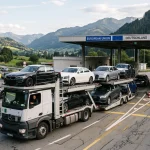
Importing an automobile from the Federal Republic of Germany to the Netherlands offers exceptional automotive value. Dutch motorists frequently look across the border to capitalize on the massive inventory of German pre-owned vehicles, superior factory options, and favorable depreciation curves. However, conducting a thorough duits kenteken checken audit is essential to eliminate the severe risks of cross-border odometer fraud, unrecorded structural accident damage, and customs complications at the RDW.
How the German License Plate System Operates for Dutch Buyers
Unlike the Dutch vehicle registration system where the yellow license plate remains permanently affixed to a single vehicle throughout its operational life, the German registration infrastructure is fundamentally distinct:
- Regional Owner Association: German standard plates (Amtliche Kennzeichen) are issued to a specific individual and municipal authority (such as
Kfor Cologne,Sfor Stuttgart, orFfor Frankfurt). - Plate Deactivation Upon Export: When a German resident sells a car or preps it for international export, the local registration bureau (Zulassungsstelle) removes the municipal inspection badges from the metal plates. The license plate immediately ceases to exist in the active German transport register.
- Why Chassis Decoding is Crucial: Because German plates are ephemeral and can be recycled, entering a license plate into a database only works if cross-referenced with the vehicle’s permanent 17-digit Vehicle Identification Number (VIN / Fahrzeug-Identifizierungsnummer — FIN).
The Step-by-Step RDW Import Process for German Vehicles
Bringing a German vehicle into the Netherlands requires following a formalized statutory workflow with the Netherlands Vehicle Authority (Rijksdienst voor het Wegverkeer — RDW):
- Execute the Pre-Purchase VIN Verification: Confirm that the vehicle has clean title records, unbroken TÜV inspection mileage progression, and no active stolen status across European police databases.
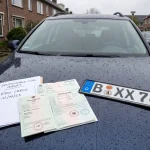
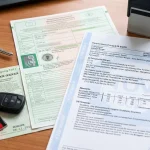
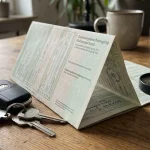
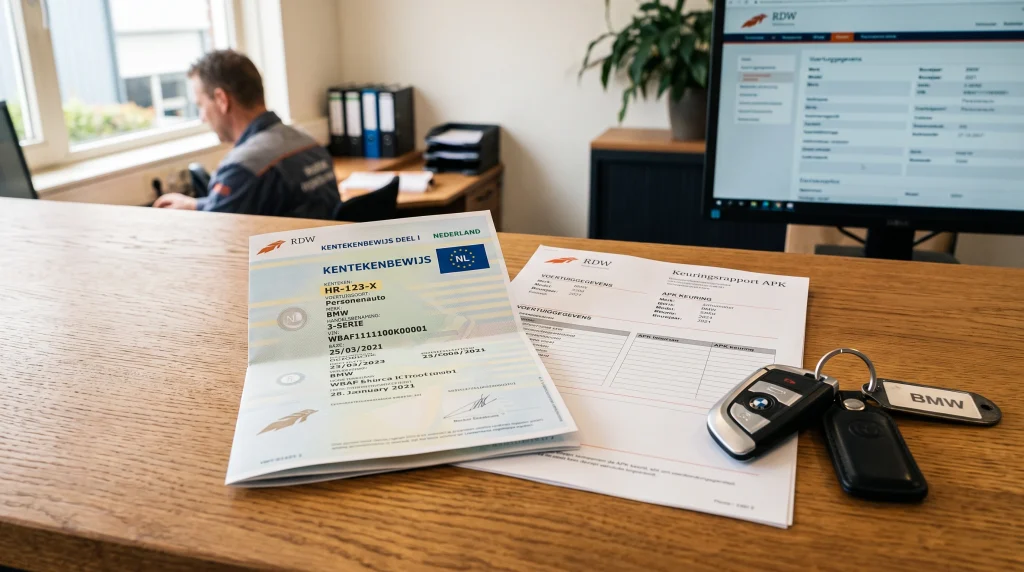
- Secure All Original German Registration Papers: You must physically possess both green registration certificates: Zulassungsbescheinigung Teil I (Fahrzeugschein) and Zulassungsbescheinigung Teil II (Fahrzeugbrief). Without both original certificates, the RDW will reject your import application.
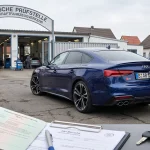
- Schedule an RDW Intake Inspection: Transport the vehicle to an official RDW inspection facility (RDW-keuringsstation) for chassis number identity verification, roadworthiness assessment, and technical parameter logging.
- File the Dutch BPM Tax Return: Submit your BPM luxury vehicle tax declaration to the Dutch Tax and Customs Administration (Belastingdienst) based on historical CO2 emissions benchmarks.
- Receive Dutch Registration and Fabricate Yellow Plates: Once the Belastingdienst confirms receipt of the BPM payment, the RDW issues the Dutch registration card (Kentekencard) and registration code, allowing you to purchase official Dutch yellow license plates from an authorized stamping shop.
Crucial Data Fields on German Vehicle Documents
During a duits kenteken checken review, meticulously examine the following technical fields on Zulassungsbescheinigung Teil I:
| Field Indicator | German Technical Term | Diagnostic Importance for RDW | Impact on Dutch Registration |
|---|---|---|---|
| Field E | Fahrzeug-Identifizierungsnummer (VIN) | 17-digit chassis sequence stamped into structural steel unibody. | RDW inspectors physically verify stamping depth and unibody welds against this field. |
| Field B | Datum der Erstzulassung | Exact historical date of first official road registration. | Determines vehicle age for BPM depreciation table calculation. |
| Field V.7 | Kohlendioxid (CO2) in g/km | Certified laboratory exhaust emission value (NEDC or WLTP). | Primary mathematical multiplier for Dutch BPM taxation. |
| Field K | Nummer der EG-Typgenehmigung | European Community Whole Vehicle Type Approval number. | Proves vehicle conforms to EU safety directives, avoiding custom homologation testing. |
Overcoming Cross-Border Odometer Manipulation
Because vehicles leaving Germany exit the German registration register and enter the Dutch National Auto Pas (NAP) system only upon RDW registration, unethical export brokers exploit this jurisdictional boundary to roll back digital odometers. A vehicle with 220,000 km in Frankfurt might arrive at an RDW testing station showing 115,000 km.
To insulate yourself from odometer rollbacks:
- Obtain the German TÜV / DEKRA Test Certificate (HU-Prüfbericht): The physical inspection sheet records the exact mileage at every 24-month inspection interval. The RDW recognizes a valid German TÜV inspection and transfers its remaining validity directly into Dutch APK roadworthiness status.
- Request Central Manufacturer Digital Service Logs: Modern European brands maintain unified global warranty and service databases. An authorized franchised dealer can look up the complete maintenance chronology regardless of whether work was performed in Berlin or Utrecht.
- Examine Wear Indicators: Check the texture of the leather steering wheel, wear on the brake pedal rubber, driver’s seat stitching, and the condition of front suspension bushings. Discrepancies between physical condition and dashboard mileage should immediately raise red flags.
Frequently Asked Questions
Does RDW take over a valid German TÜV inspection?
Yes. Under European Directive 2014/45/EU, if you present an authentic, valid German HU/AU test certificate (TÜV, DEKRA, GTÜ), the RDW will adopt the inspection expiration date as the vehicle’s Dutch APK expiration date without re-inspecting the vehicle’s mechanical components.
Can I drive an imported German vehicle directly to the RDW station?
Yes, but only by requesting a free one-day registration permit (Eendagskenteken) from the RDW. This permit allows you to legally drive the vehicle on Dutch public roads solely on the day of the scheduled inspection between your home address and the RDW station.
Get our latest guides, news, and insights highlighted in your Google Search & AI Overviews.