✨ This article was AI edited. Editorial responsibility: VinCheckGermany.eu.
Produced with AI. This article was artificially generated. Editorial responsibility: VinCheckGermany.eu.
A Duitse kentekens check audits German license plate documentation, chassis numbers (VIN), and factory emission certificates to calculate Dutch luxury vehicle tax (BPM) during cross-border vehicle imports. This verification confirms clean registration title records, validates historic TÜV roadworthiness inspections, and eliminates costly tax penalties during registration at the Netherlands Vehicle Authority (RDW).
For automotive importers, car collectors, and private buyers residing in the Netherlands, purchasing motor vehicles from the German market offers substantial economic advantages. Germany’s vast automotive production infrastructure and extensive dealer networks provide thousands of well-specified, competitively priced pre-owned automobiles. However, completing a successful cross-border transaction requires executing a dedicated duitse kentekens check to calculate residual vehicle tax (BPM), audit technical documentation, and eliminate fraud risks.
Deconstructing German License Plates for International Observers
In Germany, the motor vehicle registration framework is governed at the regional administrative tier rather than by a single national register. A standard German license plate (Euro-Kennzeichen) is packed with diagnostic geographic and administrative data:
- City / District Identifier (Unterscheidungszeichen): The first one, two, or three letters indicate the administrative district where the car was registered (e.g.,
Mfor Munich,Bfor Berlin,HHfor the Free and Hanseatic City of Hamburg, orGAPfor Garmisch-Partenkirchen). Larger cities have single-letter codes; smaller rural districts have three-letter abbreviations. - State Seal Decal (Stempelplakette): Positioned on the lower section between the city code and the random letters, this colored holographic decal features the coat of arms of the German Federal State (Bundesland) and validates active official registration.
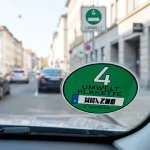
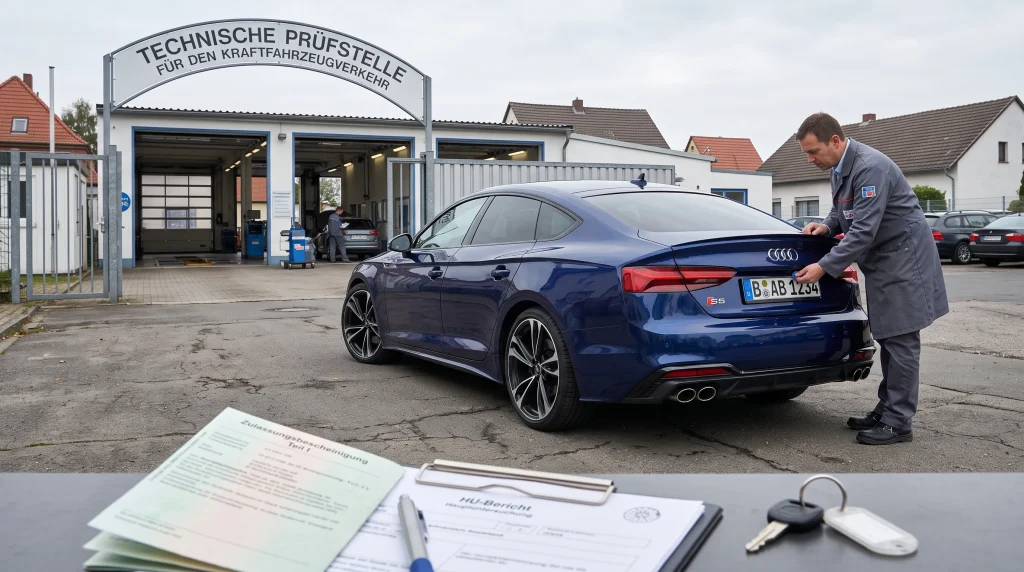
- Inspection Decal (TÜV-Plakette): Located on the rear license plate, this circular colored sticker indicates the year (in the center) and the month (at the top 12 o’clock position) when the next mandatory roadworthiness test (Hauptuntersuchung) is legally due.
- The Need for a VIN Audit: Because German license plates are immediately removed and destroyed when a vehicle is deregistered (Abgemeldet) for export, a duitse kentekens check must extract and verify the underlying 17-digit Vehicle Identification Number (VIN / FIN) to reveal historical records.
Understanding Dutch BPM Tax Calculation on German Imports
When bringing an automobile across the German border into the Netherlands, the single largest additional expense is the BPM (Belasting van Personenauto’s en Motorrijwielen — Passenger Car and Motorcycle Tax). Navigating BPM calculation correctly can save thousands of euros:
1. CO2-Based Progressive Tax Scale
In the Netherlands, BPM on passenger cars is calculated primarily based on certified CO2 exhaust emissions in grams per kilometer (recorded in Field V.7 of the German registration document). Vehicles with higher carbon footprints incur steeper tax brackets.
2. The Three Methods of BPM Depreciation
For imported pre-owned vehicles, buyers are entitled to apply depreciation discounts against the gross historical BPM liability. Dutch tax law allows three distinct calculation methodologies:
| BPM Calculation Method | Operational Mechanism | Ideal Vehicle Scenario | Documentation Required |
|---|---|---|---|
| Statutory Depreciation Table (Forfaitaire Tabel) | Applies a fixed statutory percentage discount based strictly on the exact age of the vehicle in months since first registration. | Flawless, low-mileage vehicles in pristine aesthetic and mechanical condition. | German registration document proving date of first entry (Field B). |
| Price Index / Valuation Guide (Koerslijst) | Calculates real-world market depreciation using certified industry price benchmarks (such as Autotelex, Eurotax, or XRAY). | Standard fleet or passenger vehicles with average to high mileage. | Certified Koerslijst valuation calculation report printout. |
| Independent Appraisal Report (Taxatierapport) | A certified automotive appraiser inspects the vehicle and documents existing cosmetic defects, wear, or accident damage to justify a lower valuation. | Vehicles with documented cosmetic imperfections, high mileage, or minor accident histories. | Official certified physical appraisal dossier completed prior to RDW inspection. |
Essential Checklist for German Paperwork Verification
When completing a duitse kentekens check before handing over purchase funds, verify these documentation milestones:
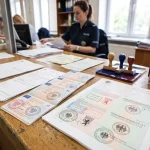
- Zulassungsbescheinigung Teil I & Teil II: Verify that both parts of the German registration certificate are originals printed on security paper with matching watermark patterns and consistent ownership stamps.
- Certificate of Conformity (CoC): Ask the seller for the European Certificate of Conformity (EG-Übereinstimmungsbescheinigung). This document contains complete technical homologation parameters, making RDW registration seamless and rapid.
- Deregistration Certificate (Abmeldebescheinigung): Confirm that the vehicle has been officially decommissioned in Germany. The municipal registration stamp on Teil I must be clipped or stamped with Außerbetriebsetzung.
- TÜV / DEKRA Test Certificate: Ensure you receive the latest physical roadworthiness test report. The RDW will accept this document to validate your vehicle’s Dutch APK without requiring an additional mechanical inspection.
Frequently Asked Questions
Can I choose the most advantageous BPM calculation method?
Yes. Under Dutch and European tax jurisprudence, vehicle importers are legally entitled to calculate their BPM tax obligation using whichever compliant calculation method yields the lowest tax liability (the historical historical tax regime or the current tax scale).
What happens if I drive an imported car without paying BPM?
Driving an imported motor vehicle on Dutch public roads without paying BPM or securing temporary tax exemption constitutes tax evasion. Dutch tax inspectors and police can impound the vehicle and assess substantial administrative fines in addition to the unpaid tax liability.
Erhalten Sie unsere neuesten Ratgeber, News und Analysen hervorgehoben in der Google-Suche und in AI Overviews.