✨ This article was AI edited. Editorial responsibility: VinCheckGermany.eu.
Produced with AI. This article was artificially generated. Editorial responsibility: VinCheckGermany.eu.
A VIN KBA lookup in Europe queries the German Federal Motor Transport Authority (Kraftfahrt-Bundesamt) vehicle registry using a 17-character chassis number or HSN/TSN codes. This institutional search verifies official vehicle type approvals (ABE), emissions classification Euro standards, safety recall statuses, and cross-border registration validity across the European Union.
The Federal Motor Transport Authority of Germany, known natively as the Kraftfahrt-Bundesamt (KBA), serves as the ultimate sovereign custodian of automotive compliance, type certification, and safety oversight in Europe’s largest automotive market. For vehicle buyers, automotive importers, and forensic inspectors, understanding how to navigate a VIN KBA lookup Europe query is the golden key to unlocking verified factory specifications, structural type approvals, and critical manufacturer recall history.
What Is the Kraftfahrt-Bundesamt (KBA)?
Headquartered in Flensburg, Germany, the KBA operates under the jurisdiction of the German Federal Ministry for Digital and Transport (BMDV). It maintains three critical central registers that dictate automotive operations across Germany and coordinate with broader European road safety organizations:
- Zentrales Fahrzeugregister (ZFZR — Central Vehicle Register): Holds registration status, ownership transfers, and technical data for over 60 million registered German motor vehicles and trailers.
- Zentrales Fahrerlaubnisregister (ZFER — Central Driver Licensing Register): Manages driver licensing endorsements and status.
- Fahreignungsregister (FAER — Register of Driver Fitness): Manages the points system for traffic infractions in Germany.
Beyond regional enforcement, the KBA is the primary European regulatory body responsible for issuing General Operating Permits (Allgemeine Betriebserlaubnis — ABE) and European Community Whole Vehicle Type Approvals (EC-WVTA). When an automaker like BMW, Mercedes-Benz, Volkswagen, or Porsche certifies a new powertrain or aerodynamic body kit for the European continent, technical documentation passes directly through KBA laboratories.
The Relationship Between German VIN and HSN / TSN Codes
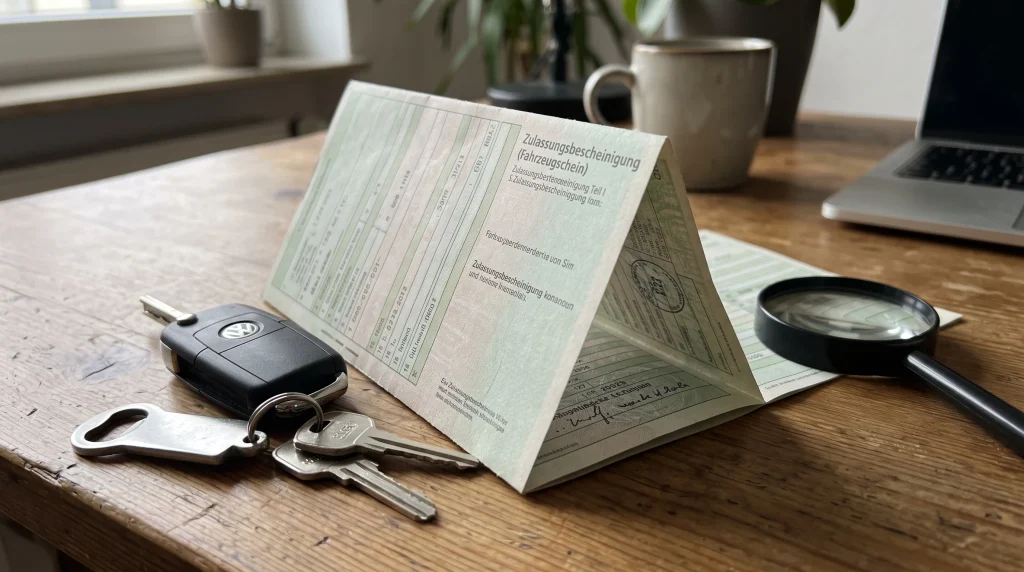
In standard German vehicle documentation (specifically within the Zulassungsbescheinigung Teil I registration document), the Vehicle Identification Number (FIN/VIN) works symbiotically with two unique government identifiers: the HSN and TSN codes.
| Identifier Code | Document Location | Code Structure | Technical & Regulatory Function |
|---|---|---|---|
| HSN (Herstellerschlüsselnummer) | Field 2.1 in German Fahrzeugschein | 4-digit numerical string (e.g., 0588 for Audi, 0005 for BMW, 0603 for VW) | Identifies the official manufacturer corporation recognized by German transport authorities. |
| TSN (Typschlüsselnummer) | Field 2.2 in German Fahrzeugschein | 3-character alphanumeric or 8-character string (e.g., AHK00012) | Defines the exact model variant, engine output (kW), fuel type, and body style configuration. |
| FIN / VIN (Fahrzeug-Identifizierungsnummer) | Field E in German Fahrzeugschein | 17-character ISO 3779 alphanumeric sequence | Identifies the individual unique vehicle chassis, factory options, and assembly serial number. |
What Information Can You Extract from a KBA VIN Inquiry?
Submitting an inquiry through the KBA data architecture provides verified institutional facts that commercial used car sellers cannot distort:
1. Official Safety Recall Database (KBA Rückrufdatenbank)
The KBA maintains Germany’s mandatory public safety recall repository. Unlike discretionary technical service bulletins, KBA-supervised recalls involve immediate passenger safety risks (e.g., Takata airbag inflators, power steering ECU failures, high-voltage battery short-circuits). A KBA recall query reveals:
- The official KBA reference number (KBA-Referenznummer).
- The manufacturer’s internal campaign tracking code.
- The specific production date ranges affected by the mechanical flaw.
- Whether remedial corrective measures are legally mandatory to prevent vehicle deregistration.
2. Environmental Emissions & Low-Emission Zone (Umweltplakette) Eligibility
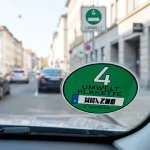
Major German and European metropolitan centers enforce strict low-emission zones (Umweltzonen) requiring green emissions stickers (Euro 4, Euro 5, or Euro 6 classification). KBA documentation establishes the legally binding emissions key number (Emissionsschlüssel located in Field 14.1 of German papers), proving whether a pre-owned diesel vehicle is permitted to enter cities like Munich, Berlin, Stuttgart, and Frankfurt.
3. Homologation Data & Approved Wheel/Tire Configurations
German TÜV and DEKRA technical inspections strictly fail vehicles equipped with aftermarket wheel dimensions or suspension alterations that lack an official KBA component approval (Teilegutachten) or General Operating Permit (ABE). Cross-referencing KBA data confirms the baseline homologation parameters approved for that exact chassis.
How European Importers Use KBA Data to Prevent Import Pitfalls
Exporting a car from Germany to another European nation requires de-registering the vehicle and obtaining specialized transit license plates (Ausfuhrkennzeichen or Kurzzeitkennzeichen). During this transaction, buyers frequently encounter common documentation traps:
- Missing Certificate of Conformity (CoC): The Certificate of Conformity (EG-Übereinstimmungsbescheinigung) proves that the vehicle complies with European Union type approval standards. If the original paper CoC is lost, KBA registration data enables local transport agencies to verify that the vehicle holds an active European type approval number (Field K in German documents).
- Deregistration Certificate (Abmeldebescheinigung): Verify that the vehicle is officially recorded as deregistered (Außerbetriebsetzung) in the KBA register. An active German registration prevents seamless title transfer in another EU member state.
- Scrapped or Certificate of Destruction (Verwertungsnachweis): If a vehicle was written off and officially designated as dismantled in Germany, the KBA issues a destruction notice. Attempting to register such a chassis abroad will result in immediate seizure.
Step-by-Step: Performing a KBA & German Vehicle Verification
To audit a German vehicle prior to purchase:
- Examine the German Registration Certificate (Teil I & Teil II): Ensure the 17-digit VIN in Field E of Zulassungsbescheinigung Teil I matches Field E of Zulassungsbescheinigung Teil II (the vehicle ownership title/brief) with zero typographical discrepancies.
- Check KBA Recall Portal: Visit the official KBA recall search page, enter the vehicle manufacturer and model, and cross-reference your vehicle’s model year to confirm that all manufacturer safety campaigns have been serviced at authorized workshops.
- Inspect the KBA Watermarks: Authentic German registration documents feature fluorescent security threads, high-relief micro-lettering, and an embossed holographic federal eagle seal on the registration card.
Frequently Asked Questions About KBA Lookups
Can a private individual access the full KBA vehicle register?
Direct live API access to the central ZFZR vehicle database is restricted to law enforcement, road traffic licensing offices (Zulassungsstellen), and authorized inspection organizations (TÜV, DEKRA, GTÜ). However, public citizens can freely access the KBA public recall database and type-approval specification catalogs.
What is the KBA number on aftermarket car parts?
Aftermarket alloy wheels, exhausts, and spoilers often carry a stamped 5-digit number preceded by the letters “KBA” (e.g., KBA 48721). This signifies that the component has undergone rigorous destructive testing and received an official General Operating Permit (ABE) from the German Federal Motor Transport Authority.
What happens if an open KBA recall was never serviced on a car I bought?
If a safety recall supervised by the KBA remains unperformed, German transport authorities dispatch formal warning letters. If the owner fails to bring the vehicle to an authorized dealership for the mandatory remedial update within a prescribed grace period, the vehicle’s roadworthiness operating license is legally revoked (Betriebsuntersagung), rendering it illegal to drive anywhere in the European Union.
Erhalten Sie unsere neuesten Ratgeber, News und Analysen hervorgehoben in der Google-Suche und in AI Overviews.