✨ This article was AI edited. Editorial responsibility: VinCheckGermany.eu.
A Duits kenteken check (German license plate check) investigates the registration status, technical inspection history (TÜV), and 17-digit chassis number of an automobile in Germany prior to export to the Netherlands. This cross-border verification audits official German documents (Fahrzeugbrief and Fahrzeugschein), prevents odometer rollback, and calculates residual Dutch BPM tax before RDW registration.
Importing a pre-owned automobile from Germany to the Netherlands represents one of the most cost-effective strategies for European car enthusiasts and daily commuters alike. The German second-hand automotive market is renowned for competitive purchase prices, extensive optional equipment configurations, and meticulously documented service histories. However, navigating cross-border acquisitions requires conducting a comprehensive duits kenteken check to avoid odometer fraud, concealed collision damage, and administrative bottlenecks at the Dutch Vehicle Authority (RDW).
Understanding the Difference Between Dutch and German Registration Systems
To successfully perform a duits kenteken check, buyers must understand the fundamental divergence between Dutch and German vehicle administration frameworks:
- Dutch System (Vehicle-Bound): In the Netherlands, a license plate is permanently assigned to the vehicle chassis from initial road registration until final scrap disposal. The vehicle history follows the yellow plate throughout its operational lifespan.
- German System (Owner-Bound / Regional): In Germany, official registration plates (Amtliche Kennzeichen) belong to the registered owner and their municipal district (Landkreis or independent city, such as
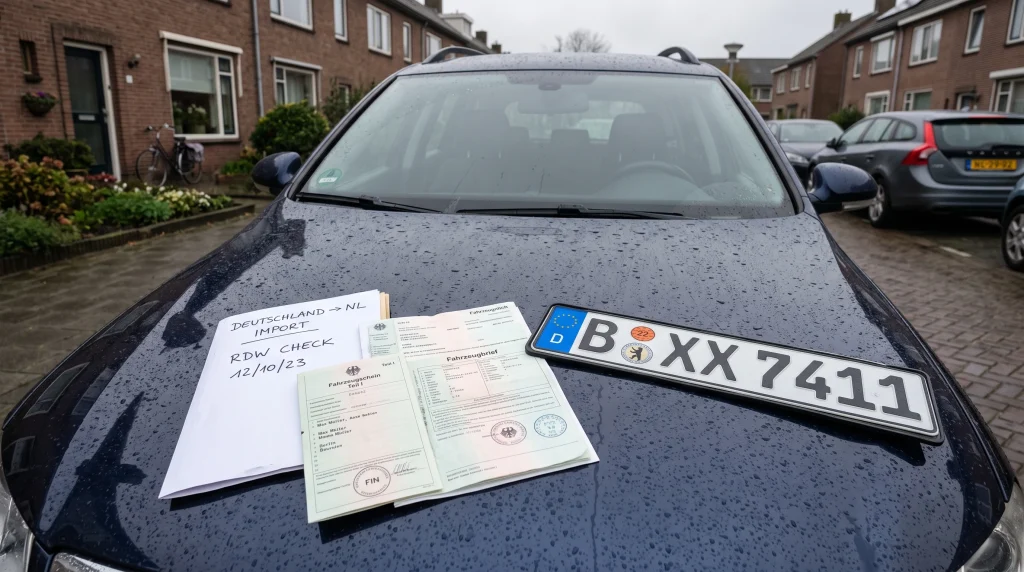
Bfor Berlin,Mfor Munich, orHHfor Hamburg). - The Deregistration Protocol (Abmeldung): When a German vehicle owner sells their automobile or prepares it for export, the municipal seals (Stempelplaketten) on the physical plates are scratched off (Entstempelt), and the license plate is instantly invalidated in the central German vehicle database.
- Why the VIN is Mandatory: Because German license plates can be reassigned between vehicles or revoked upon deregistration, a reliable vehicle history check on a German car cannot rely solely on a license plate; it must be anchored to the permanent 17-digit Vehicle Identification Number (VIN / FIN).
Auditing Critical German Ownership Documentation
When executing a cross-border import from Germany to the Netherlands, the RDW requires original and untampered German vehicle papers. Any missing document will halt your Dutch road registration:
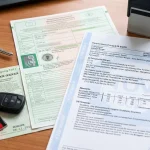
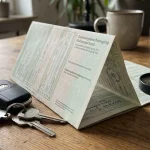
1. Zulassungsbescheinigung Teil I (Fahrzeugschein — Registration Certificate)
The green multi-fold vehicle registration certificate. Essential diagnostic fields include:
- Field E: The complete 17-character VIN. Must match the metal chassis stamp exactly.
- Field B: Date of initial road entry (Erstzulassung).
- Field V.7: Certified CO2 emission rating in grams per kilometer. This figure is required by the Dutch Tax and Customs Administration (Belastingdienst) to compute your BPM luxury vehicle tax liability.
- Field 14: European emission tier (Euro 5, Euro 6d-TEMP, Euro 6e).
2. Zulassungsbescheinigung Teil II (Fahrzeugbrief — Ownership Title)
Printed on security watermarked parchment, Teil II constitutes proof of legal ownership. Crucially, examine Field Anzahl der Vorhalter (number of previous registered owners). If a seller advertises an automobile as “single-owner” but Teil II lists three or four prior registrations, the automobile was likely operated within a commercial rental fleet or company vehicle pool.
TÜV and DEKRA Technical Inspection Reports (Hauptuntersuchung)
In Germany, motor vehicles must complete a mandatory roadworthiness inspection every 24 months (Hauptuntersuchung / Abgasuntersuchung — HU/AU) conducted by certified inspection organizations (TÜV SÜD, TÜV Rheinland, DEKRA, GTÜ, or KÜS).
When performing a duits kenteken check, requesting the physical paper HU inspection certificate yields critical verification data:
| Inspection Document | Issuing Authority | Key Information for Dutch Buyers | RDW Recognition |
|---|---|---|---|
| HU-Prüfbericht (TÜV/DEKRA) | Certified German Test Center | Certified odometer reading at inspection, brake force balance, suspension defects, and emissions readiness. | A valid German TÜV inspection is officially recognized by the RDW and converted into a valid Dutch APK period. |
| Certificate of Conformity (CoC / CVO) | Automotive Manufacturer | Comprehensive factory homologation data, precise axle loads, towing capacity, and official WLTP CO2 data. | Eliminates individual technical testing fees and expedites administrative RDW intake approval. |
Combating Cross-Border Odometer Fraud (Tachofraude)
Odometer rollback remains a widespread vulnerability in cross-border European car trading. Because an automobile exits the German registration database upon deregistration and enters the Dutch National Auto Pas (NAP) database only upon RDW inspection, fraudulent traders exploit this geographic gap to subtract tens of thousands of kilometers from the digital odometer.
To prevent falling victim to odometer manipulation:
- Request Sequential Service Invoices: Cross-check service dates and recorded mileage against the physical workshop stamps in the maintenance booklet. Verify that time intervals between services reflect realistic annual driving habits (typically 15,000 to 25,000 km per year in Germany).
- Retrieve Manufacturer Cloud Service Records: For premium brands like Audi, BMW, Mercedes-Benz, and Volkswagen, authorized dealerships record all workshop visits on central servers. Ask the seller for the official digital service history printout.
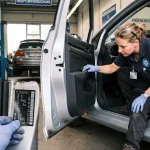
- Inspect Physical Wear Patterns: Evaluate the steering wheel texture, driver’s seat bolster wear, brake pedal rubber grooves, and hood paint condition. An automobile showing 70,000 km on the dashboard should not display bare metal through rubber pedal pads or severe stone-chip sandblasting on the front bumper.
Transit Options: Driving to the Netherlands vs. Trailer Transport
To safely and legally transport your German vehicle across the border to the Netherlands, explore these two compliant avenues:
- German Export Plates (Ausfuhrkennzeichen): Recognizable by the red vertical stripe on the right edge indicating the expiry date. These plates include valid international third-party liability insurance (Green Card / Grüne Karte) and are officially authorized for cross-border transit across European roads.
- Auto Ambulance or Car Trailer: Transporting the vehicle on a dedicated car transporter or trailer is the most secure method. The purchased car does not need to be registered or insured for road use while loaded on the trailer.
Frequently Asked Questions
Can I drive an imported German car in the Netherlands using yellow Kurzzeitkennzeichen?
No. German short-term license plates with a yellow stripe (Kurzzeitkennzeichen) are intended strictly for test drives within German borders. Dutch tax authorities (Belastingdienst) and police actively enforce prohibitions against driving vehicles on yellow German transit plates within the Netherlands without prior tax exemption approval (BPM-vrijstelling kortstondig gebruik).
What is BPM and how is it calculated when importing a car from Germany?
BPM (Belasting van Personenauto’s en Motorrijwielen) is the Dutch passenger car and motorcycle tax. For used vehicles imported from Germany, BPM is calculated based on original CO2 emissions, with depreciation discounts applied according to an official historical depreciation table or certified appraisal report.
Get our latest guides, news, and insights highlighted in your Google Search & AI Overviews.