✨ This article was AI edited. Editorial responsibility: VinCheckGermany.eu.
Produced with AI. This article was artificially generated. Editorial responsibility: VinCheckGermany.eu.
A VIN number check in Germany inspects an automobile’s 17-digit chassis number against German registration papers (Fahrzeugschein), TÜV inspection records, and KBA recall registries. This forensic verification validates mechanical equipment authenticity, identifies odometer rollbacks on imported German vehicles, and confirms clean administrative title status before finalizing an automotive acquisition.
Germany represents the epicenter of Europe’s pre-owned automotive marketplace. Renowned for meticulous highway maintenance, stringent periodic roadworthiness inspections (TÜV / DEKRA), and prestigious automotive marques (BMW, Mercedes-Benz, Porsche, Audi, Volkswagen), thousands of international buyers source vehicles directly from German dealerships and private sellers each month. However, successfully acquiring an automobile in Germany requires executing a comprehensive vin number check germany audit to navigate unique regulatory paperwork and eliminate fraud risks.
Navigating German Vehicle Documentation: Teil I & Teil II
In Germany, the Vehicle Identification Number (FIN / Fahrzeug-Identifizierungsnummer) is anchored across two interconnected official state security certificates. Any discrepancy between these documents is an immediate cause for halting transaction negotiations:
1. Zulassungsbescheinigung Teil I (Fahrzeugschein — Vehicle Registration Document)
A multi-fold green registration document that must accompany the vehicle during active road operation. Key data fields include:
- Field E: The full 17-character VIN / FIN.
- Field B: Date of first registration (Datum der Erstzulassung).
- Field 2.1 (HSN): 4-digit manufacturer key number.
- Field 2.2 (TSN): Model type key number specifying exact engine variant and body styling.
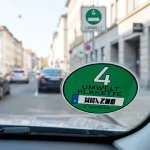
- Field 14.1 (Emissions Code): Designates European emission tier (Euro 5, Euro 6) required for municipal environmental stickers (Umweltplakette).
2. Zulassungsbescheinigung Teil II (Fahrzeugbrief — Ownership Title)
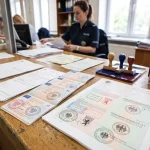
The formal certificate of legal title ownership, printed on tamper-resistant watermarked parchment. In Germany, whoever physically holds Teil II is legally presumed to possess ownership rights over the vehicle chassis. It details previous ownership registration counts, original manufacturer issuing dates, and historical municipal transfers.
Understanding TÜV and DEKRA Inspection Reports (Hauptuntersuchung — HU)
In Germany, every road-registered passenger vehicle must undergo a mandatory periodic technical inspection (Hauptuntersuchung / Abgasuntersuchung — HU/AU) every 24 months at an accredited testing laboratory (such as TÜV SÜD, TÜV Rheinland, DEKRA, GTÜ, or KÜS).
When executing a VIN number check in Germany, obtaining and inspecting the authentic paper HU test report yields invaluable diagnostic proof:
- Recorded Mileage at Inspection: The certified testing engineer records the precise odometer mileage displayed at the exact date and minute of inspection. Cross-referencing successive HU certificates reveals whether the odometer was illegally rolled back prior to export.
- Identified Mechanical Defects: Reports categorize issues into Ohne Mängel (No defects), Geringe Mängel (Minor defects), Erhebliche Mängel (Major defects requiring repair within 30 days), or Verkehrsunsicher (Dangerous / Immediate road ban).
- Inspection Sticker Hexagon: The colored inspection decal affixed to the rear license plate displays the year in the center and the expiration month at the 12 o’clock position.
Forensic Paint Depth and Chassis Alignment Verification
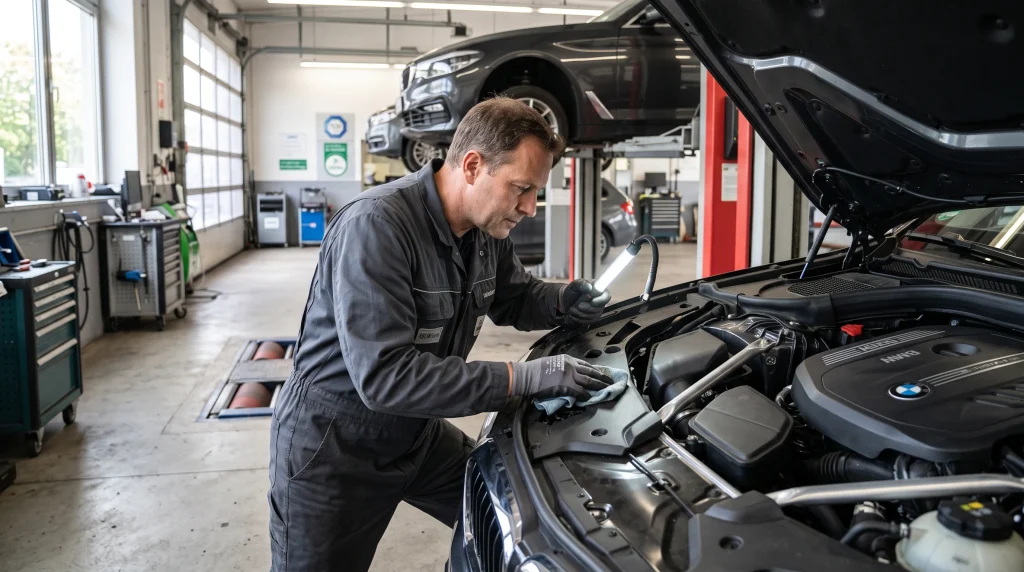
A thorough pre-purchase examination in Germany combines paper documentation with non-destructive physical testing equipment. When inspecting a German pre-owned vehicle:
- Magnetic and Ultrasonic Paint Thickness Gauges: Factory paint on German vehicles (such as BMW Dingolfing or Mercedes Sindelfingen plants) typically measures between 90 and 140 micrometers (μm). Readings exceeding 200 μm indicate repainting, while values over 400 μm prove the presence of polyester body filler used to smooth severe accident deformation.
- A-Pillar and Sill Seam Inspection: Lift rubber weather-stripping along the doors and roof arches to examine factory spot welds. Irregular spacing or aftermarket brazing indicates structural quarter-panel replacement.
- Subframe Torque Markings: High-performance German vehicles feature factory torque stripe indicators on critical suspension and subframe bolts. Broken seals indicate major disassembly or collision reconstruction.
Common Scams in the German Pre-Owned Car Market
Despite Germany’s rigorous legal framework, cross-border purchasers face specific vulnerability vectors:
1. The “Tachojustierung” (Odometer Manipulation) Industry
While manipulating vehicle odometers has been illegal under Section 22b of the German Road Traffic Act (StVG) since 2005, fraudulent operators routinely tamper with digital instrument clusters on vehicles destined for export to Central and Eastern Europe. Because export vehicles leave the German registration tracking system upon deregistration, criminals exploit the information vacuum. Always demand consecutive service records and TÜV documentation to verify mileage progression.
2. VAT Carousel Fraud (Umsatzsteuerbetrug)
When purchasing a vehicle intended for commercial cross-border export without German VAT (19% Mehrwertsteuer), ensure the selling dealer possesses a verified corporate commercial register excerpt (Handelsregisterauszug) and valid EU VIES VAT identification number. Illegitimate shell companies frequently disappear with escrow deposits before delivering valid export customs documentation (Ausfuhrbegleitdokument — ABD).
3. Export Transit License Plate Traps
To legally drive a purchased car out of Germany, buyers must secure temporary export plates (Ausfuhrkennzeichen, characterized by a red expiration date stripe on the right side) accompanied by dedicated international third-party liability insurance (Grüne Karte). Attempting to export an unregistered vehicle on yellow short-term plates (Kurzzeitkennzeichen) across international borders is strictly prohibited by multiple neighboring European jurisdictions.
Step-by-Step VIN Inspection Protocol for Buying a Car in Germany
- Compare All Stamped VIN Locations: Check the mechanical chassis stamping on the right front suspension tower, the laser-etched windshield plate, and the B-pillar holographic label against Field E of Zulassungsbescheinigung Teil I.
- Request the Original Service Booklet (Scheckheft): Verify continuous scheduled maintenance stamps from authorized brand dealerships or certified independent workshops (Meisterbetrieb).
- Execute an Electronic Diagnostic Scan: Plug an OBD-II interface into the diagnostic port to read stored chassis numbers in the ECU and scan for cleared error diagnostic trouble codes (DTCs).
- Confirm Official Deregistration: Ensure the local registration office (Zulassungsstelle) has processed the vehicle’s deregistration stamp (Außerbetriebsetzung) on the vehicle registration card.
Frequently Asked Questions
Can I check if a German car was in an accident using the VIN?
Yes. Commercial European vehicle history databases aggregate claims data from insurance consortiums and repair networks. In German law, sellers are legally obligated to disclose any significant prior accident damage (Unfallwagen) versus an accident-free vehicle (Unfallfrei). Failure to disclose constitutes civil fraud.
What does “Scheckheftgepflegt” mean on German car listings?
The German term Scheckheftgepflegt signifies that the vehicle possesses a complete, unbroken record of scheduled manufacturer service inspections performed strictly according to factory maintenance guidelines.
What is the difference between HU and AU in Germany?
Hauptuntersuchung (HU) refers to the primary vehicle safety inspection examining brakes, suspension, chassis, and lighting. Abgasuntersuchung (AU) is the specialized emissions test analyzing tailpipe exhaust gases and on-board diagnostic emissions readiness codes.
Erhalten Sie unsere neuesten Ratgeber, News und Analysen hervorgehoben in der Google-Suche und in AI Overviews.