✨ This article was AI edited. Editorial responsibility: VinCheckGermany.eu.
Produced with AI. This article was artificially generated. Editorial responsibility: VinCheckGermany.eu.
A European VIN check evaluates a motor vehicle’s 17-character chassis number across international transport registries, insurance write-off databases, and periodic inspection logs (TÜV, MOT, ITV, APK). This cross-border verification reveals hidden salvage titles, identifies odometer rollback on imported pre-owned vehicles, and verifies legal ownership clearance before completing a cross-border automotive transaction.
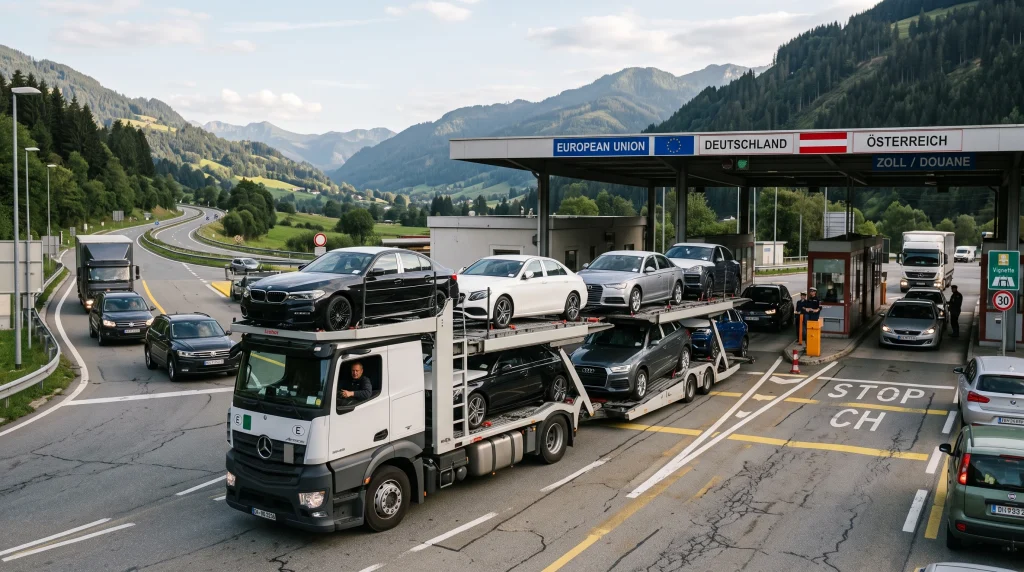
The European Union’s Single Market provides unparalleled freedom of movement for goods and capital, enabling millions of consumers to purchase pre-owned motor vehicles across national boundaries every year. A motorist in Amsterdam can purchase a sports sedan in Munich, while an enthusiast in Warsaw can import an executive coupe from Brussels. However, the absence of a unified, singular pan-European vehicle title register creates lucrative opportunities for fraudulent operators. Executing a rigorous vin check europe audit is the definitive defense against cross-border automotive fraud.
The Challenges of Cross-Border Vehicle Data Fragmentations
While vehicle emissions and crash-test safety standards are harmonized at the EU level under Whole Vehicle Type Approval (EC-WVTA) directives, motor vehicle registration, title issuance, and periodic roadworthiness monitoring remain strictly decentralized at the national member state level:
- National Data Silos: Germany logs registrations in the Zentrales Fahrzeugregister (ZFZR), the Netherlands relies on the RDW, France administers the SIV (Système d’Immatriculation des Véhicules), and Spain monitors vehicles via the DGT (Dirección General de Tráfico).
- The “Clean Slate” Export Loophole: When a vehicle is permanently deregistered for international export in one EU nation, its historical records do not automatically transfer into the destination country’s municipal database. Unscrupulous dealers routinely exploit this administrative void to roll back digital odometers and conceal major collision write-offs.
- Cross-Border Salvage Laundering: An automobile declared a total structural loss (salvage write-off) by an insurance consortium in Belgium or Germany can be purchased cheaply at salvage auctions, cosmetically patched with filler, exported to another European member state, and registered with a pristine “clean” title.
Major European Vehicle Inspection Frameworks Compared
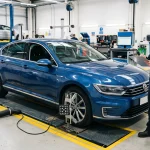
Periodic Technical Inspections (PTI) across the European Union operate under Directive 2014/45/EU. Understanding each nation’s testing authority enables buyers to audit historical roadworthiness documents effectively:
| Country | Inspection System | Testing Interval | Odometer & Defect Verification Value |
|---|---|---|---|
| Germany | Hauptuntersuchung (TÜV / DEKRA / GTÜ) | Every 24 months | Highly rigorous; certified paper test sheets record exact kilometer count and categorized safety flaws. |
| Netherlands | APK (Algemene Periodieke Keuring) | Annually after 4th year | Synchronized directly with the National Auto Pas (NAP) mileage database, offering virtually 100% odometer accuracy. |
| France | Contrôle Technique (CT) | Every 24 months | Integrated with the public HistoVec portal; logs ownership milestones, technical defects, and accident write-offs. |
| Spain | ITV (Inspección Técnica de Vehículos) | Annually after 10th year | Recorded directly on the vehicle’s green technical card (Tarjeta de Inspección Técnica) and digital DGT registry. |
Combating Cross-Border Financial Liens and Stolen Vehicle Trafficking
Purchasing an automobile across European borders without verifying financial encumbrances and law enforcement databases exposes the buyer to catastrophic loss:
1. Outstanding Hire-Purchase and Bank Liens
In many European countries, automotive leasing corporations and banking institutions hold security ownership over a vehicle until the final balloon payment is satisfied. If a debtor absconds with the vehicle across international borders and sells it to an unsuspecting buyer, the financing bank retains legal title and can petition European courts to repossess the vehicle without reimbursing the innocent third-party purchaser.
2. Stolen Vehicle Databases (INTERPOL & Schengen Information System)
European law enforcement agencies share stolen vehicle intelligence via the Schengen Information System (SIS II) and INTERPOL’s Stolen Motor Vehicle (SMV) database. When you present an imported vehicle for inspection at your domestic motor authority, the vehicle’s VIN is scanned against SIS II. If the chassis is flagged as stolen, police officers will immediately seize the vehicle on the spot.
Five-Step Verification Protocol for European Vehicle Imports
- Request High-Resolution Document Scans: Before committing travel expenses or wire transfers, demand complete scans of the national registration certificates (e.g., German Teil I & II, French Carte Grise, Italian Carta di Circolazione).
- Execute an Independent International VIN Search: Query commercial European vehicle history registers that cross-reference insurance claim databases, salvage auction listings, and leasing registers across multiple jurisdictions.
- Cross-Check the Certificate of Conformity (CoC): Ensure the vehicle includes its official manufacturer CoC document. This document certifies all emissions, noise, and safety homologation parameters required by your national licensing authority.
- Physically Inspect Structural VIN Stampings: Verify that the mechanical stamping on the unibody firewall, front right suspension turret, and windshield aperture are completely identical without evidence of cutting, grinding, or re-welding.
- Verify Seller Identity and Commercial Registry: If purchasing from an independent dealership, check the company’s corporate registration number in the national commercial register (e.g., German Handelsregister or Dutch Kamer van Koophandel) and verify active EU VIES VAT status.
Frequently Asked Questions
Can a European VIN check verify factory optional equipment?
Yes. Decoding the VIN against manufacturer build-sheet databases retrieves the exact factory configuration, including premium audio packages, panoramic roofs, sports differential upgrades, and driver-assistance radar systems.
What should I do if the VIN on the paperwork does not match the chassis stamp?
Halt all transactions immediately and do not transfer funds. A discrepancy between the registration certificate and physical chassis metal indicates an administrative clerical error, an unauthorized unibody swap, or a cloned stolen vehicle.
Erhalten Sie unsere neuesten Ratgeber, News und Analysen hervorgehoben in der Google-Suche und in AI Overviews.