✨ This article was AI edited. Editorial responsibility: VinCheckGermany.eu.
When you perform a German vehicle check (sprawdzenie vin niemcy), you decode the 17-digit chassis number to verify vehicle history, TÜV inspection records, and title status before importing a car from Germany. This comprehensive audit reveals concealed collision repairs, detects odometer rollback fraud, and confirms legal ownership credentials before final payment.
For automotive buyers, private importers, and independent dealerships across Central Europe, Germany represents the largest marketplace for well-specified pre-owned motor cars. Hundreds of thousands of vehicles cross the German-Polish border annually. However, importing an automobile from Germany without a meticulous sprawdzenie vin niemcy exposes the purchaser to severe financial risks, including odometer tampering (korygowanie licznika), unrecorded flood damage, and masked structural collision repairs.
The Legal Infrastructure of German Vehicle Registration
Understanding the official German registration system is essential for any buyer looking to conduct a verified VIN inspection across borders:
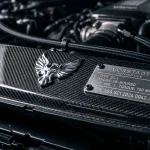
- Chassis Designation (Fahrzeug-Identifizierungsnummer — FIN): Under German federal transport legislation (StVZO), the 17-digit VIN is designated as the FIN. It is physically stamped into the structural body shell, typically on the firewall, front shock tower, or passenger floor pan.
- Registration Certificates (Zulassungsbescheinigung): A legally registered German automobile possesses two security documents: Teil I (Fahrzeugschein), the small folding technical certificate kept in the vehicle, and Teil II (Fahrzeugbrief), the large ownership deed kept securely at home or at the financing institution.
- Deregistration for Export (Außerbetriebsetzung): To export a vehicle legally, the German owner must decommission it at the local registration office (Zulassungsstelle). The registration seals on the plates are removed, and an official ink or perforated cancellation stamp is applied to Teil I.
Critical Data Points in a German Vehicle History Audit
A comprehensive sprawdzenie vin niemcy evaluates multiple data streams across official and commercial databases:
| Data Dimension | Primary German Source | Verification Objective | Risk Addressed |
|---|---|---|---|
| Odometer Progression | HU/AU Inspection Reports (TÜV, DEKRA, GTÜ) | Verify chronological mileage entries at mandatory 24-month test intervals. | Digital odometer manipulation between German deregistration and foreign import registration. |
| Collision & Damage History | Insurance Loss Databases & Expert Appraisals | Identify structural damage classifications (Totalschaden) and frame pull repairs. | Purchasing a cosmetically repaired salvage vehicle sold dishonestly as unfallfrei. |
| Owner & Fleet Usage | Zulassungsbescheinigung Teil II Entries | Examine prior owner counts and verify whether the car was a private vehicle or commercial fleet/taxi. | Ex-rental or ride-hail vehicles disguised as single-owner executive commuters. |
| Recall & Safety Campaigns | Kraftfahrt-Bundesamt (KBA) Registry | Verify that mandatory manufacturer safety recall campaigns have been executed. | Unaddressed airbag, brake line, or engine software recalls preventing roadworthiness approval. |
Spotting Odometer Fraud on German Export Vehicles
Odometer rollback fraud remains the single most profitable deception practiced by dishonest cross-border automotive exporters. Because national vehicle databases across the European Union do not automatically cross-share real-time mileage logs, an unscrupulous broker can purchase a commuter car with 280,000 km in Bavaria, recalibrate the digital dashboard cluster to show 135,000 km, and present it across the border as a low-mileage bargain.
To expose manipulated mileage during your sprawdzenie vin niemcy inspection:
- Demand the Original Physical HU-Prüfbericht: The German roadworthiness certificate issued by TÜV or DEKRA records the vehicle’s exact odometer reading on the test date. Insist on inspecting the physical certificate with its official security stamps rather than accepting photocopies.
- Cross-Check Digital Key Data: Modern German manufacturers (BMW, Mercedes-Benz, Audi, Volkswagen) store vehicle mileage in microchips embedded directly inside the electronic ignition keys. A certified dealership can perform a key read (Schlüsselleser) to reveal actual recorded mileage that the dashboard might not show.
- Audit Secondary Electronic Control Units (ECUs): Digital odometer modifiers frequently update the instrument cluster display (KOMBI) but fail to alter mileage recorded in the transmission control module (TCU), ABS controller, or diesel particulate filter (DPF) regeneration logs.
The Essential Physical Inspection Checklist
Before executing the final purchase contract (Kaufvertrag), implement this four-point physical verification on site:
1. Paint Thickness Profiling
Using a calibrated magnetic or ultrasonic paint thickness gauge, measure coating depths across every body panel. Original German factory paint measures between 90 and 130 microns. Readings exceeding 200 microns indicate repainting, while values over 400 microns reveal heavy body filler used to conceal collision damage.
2. Structural VIN Integrity
Inspect the stamped VIN characters on the vehicle’s unibody. Look for uniform letter spacing, identical font depth, and consistent electrocoat primer. Any signs of ground-down metal, irregular welds, or modified rivets on the VIN data plate indicate a high risk of vehicle cloning.
3. Paperwork Watermarks and Holograms
Hold Zulassungsbescheinigung Teil I & II up to natural light to verify the presence of the continuous federal eagle watermark (Bundesadler) and the reflective security thread running vertically through the security paper.
Frequently Asked Questions
Can I verify a German VIN before traveling to view the car?
Yes. Requesting the 17-digit VIN and high-resolution photographs of both registration certificates from the seller allows you to run comprehensive vehicle history checks, verify manufacturer recalls, and confirm service records before spending money on international travel.
What should I do if the seller refuses to provide the VIN?
If a private seller or dealership refuses to provide the vehicle’s VIN or withholds the registration certificates for remote verification, terminate negotiations immediately. Legitimate automotive dealers routinely provide VIN transparency to prospective buyers.
Erhalten Sie unsere neuesten Ratgeber, News und Analysen hervorgehoben in der Google-Suche und in AI Overviews.