
Every Ford Mustang has a unique identity, encoded in its Vehicle Identification Number (VIN). This 17-character alphanumeric string holds the secrets to your Mustang’s heritage, revealing crucial details like its original trim, engine specifications, and manufacturing history. For enthusiasts and potential buyers alike, understanding how to decode a VIN is essential for making informed decisions about purchasing, restoring, or simply appreciating these iconic vehicles.
Imagine stumbling upon a vintage Mustang at a car show or in a garage; knowing how to verify its authenticity can set your mind at ease and keep you from expensive mistakes. You’ll be able to spot modifications, confirm original parts, and even trace the car’s journey through time. In this guide, we’ll break down the decoding process into manageable steps, equipping you with the knowledge to unlock your pony’s true heritage. Let’s dive into the world of Mustang VINs and ensure you drive away with clarity and confidence.
Understanding the Importance of the VIN
The Vehicle Identification Number (VIN) serves as a unique fingerprint for your Mustang, encapsulating vital information about its identity, including the model, year of manufacture, assembly plant, and even specific features. For potential buyers and current owners alike, understanding the VIN provides crucial insights that range from verifying authenticity to assessing the vehicle’s history. In an era where classic cars are highly sought after, the VIN is especially critical for maintaining the integrity and value of your Mustang.
To locate your Mustang’s VIN, check the driver’s side dashboard, where it can typically be seen through the windshield, or look inside the driver’s side door jamb. This number can also be found on the engine block and other locations, depending on the model year. Once you have the VIN in hand, you’re equipped to uncover a wealth of information, such as the build sheet, which outlines the specific options and configurations of your vehicle. This knowledge empowers you to make informed decisions concerning buying, selling, or restoring your Mustang.
Decoding the VIN can seem daunting, but it follows a structured format that provides specific details. For instance, the first character usually represents the country of origin, while subsequent characters detail the manufacturer, brand, and vehicle type. By using online VIN decoder tools, enthusiasts can effortlessly decode their Mustang’s history, revealing important details like production numbers and unique factory options. This demystification of the VIN not only alleviates concerns about authenticity but also fosters a deeper appreciation for the car’s heritage and legacy.
In conclusion, the VIN is not just a series of numbers and letters; it is a vital element of your Mustang’s story. Understanding its importance equips you to navigate the world of classic cars with confidence, ensuring that every decision you make regarding your Mustang is informed and reflective of its true heritage and significance. By consulting the VIN, you’re not just accessing data; you’re unlocking the very essence of what makes your Mustang unique.
How to Locate Your Mustang’s VIN
To begin your journey into unraveling the storied history of your Ford Mustang, you first need to locate its Vehicle Identification Number (VIN). The VIN, which comprises 17 characters, serves as your Mustang’s unique identifier, revealing critical information about its model, year, engine type, and even its place of manufacture. Knowing how to find this number is essential for both routine maintenance and when delving deeper into its past through services like VIN decoding.
One of the most common locations to find the VIN is on the driver’s side dashboard. Simply glance through the windshield, and you should see a metal placard displaying the number. This spot is typically well-lit and accessible, making it easy to spot. If you don’t find it there, the next best place is the driver’s side door jamb. Open the door and look for a sticker or plate affixed to the door edge; the VIN will usually be printed clearly on it. For older models, you may also locate the VIN on the engine block, which can sometimes require a bit of searching, depending on the design of the vehicle and any aftermarket modifications that may have been made.
Another handy location for the VIN is right under the car’s hood, either on the radiator support or near the fender, although this can vary by model year. It’s important to check multiple locations, as some VINs may have been stamped in more than one spot for added security. Note that if the vehicle has undergone significant changes or restoration, it’s possible the original VIN might not be in its original place, so this might expand your search area.
Utilizing the VIN is crucial when purchasing a used Mustang or during routine inspections. Ensuring the number matches across various documentation helps avoid issues relating to titles or ownership disputes. Having the VIN at your fingertips allows you to unlock a wealth of information about your Mustang’s heritage, making it a vital component of responsible ownership and restoration.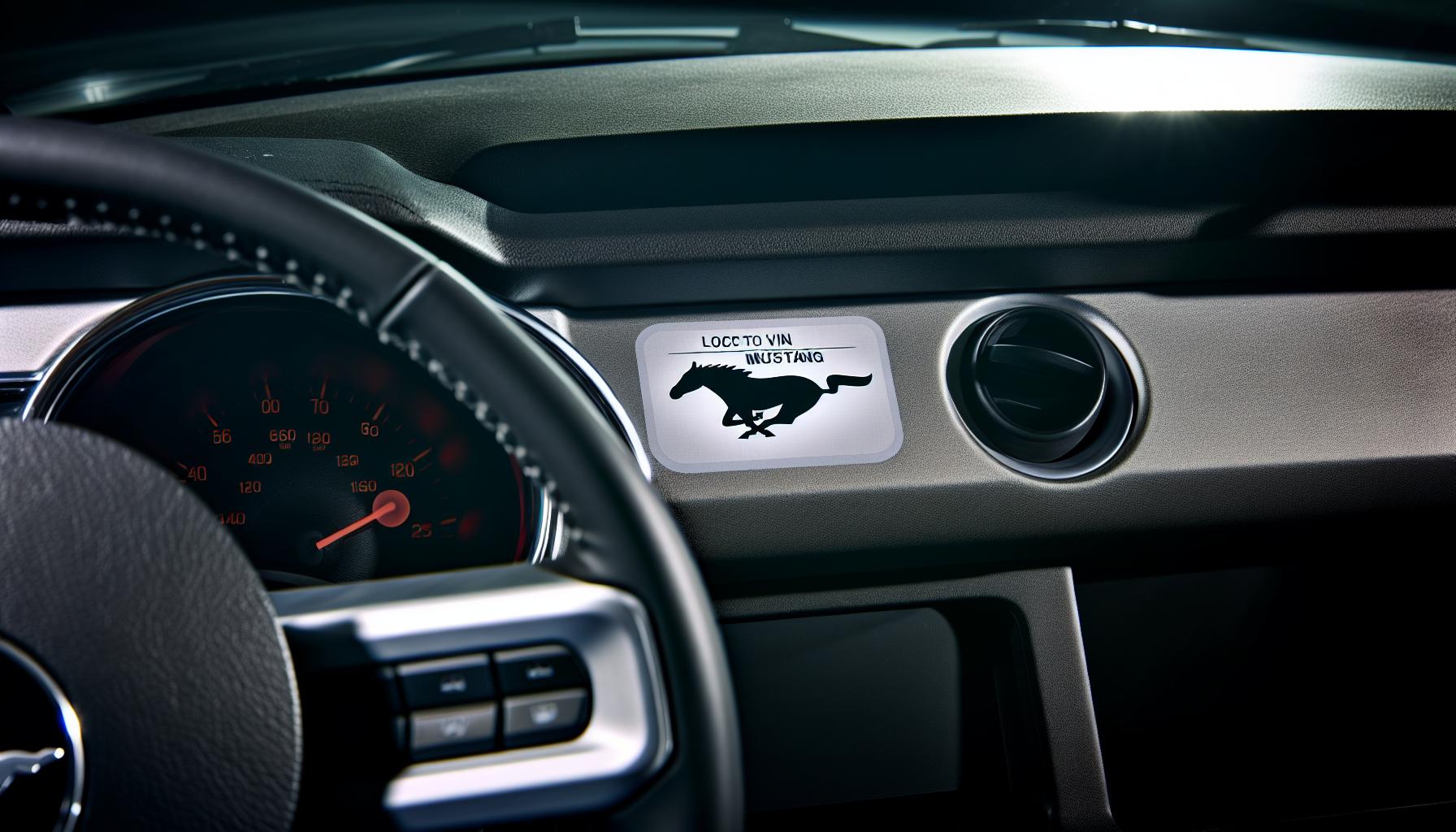
Decoding the VIN: Step-by-Step Guide
Decoding your Mustang’s VIN is like opening a treasure chest that contains vital information about your vehicle’s history and specifications. The 17-character VIN not only tells you the model year, engine type, and country of manufacture but also provides important details like the vehicle’s safety equipment and trim level. Understanding how to interpret this identifier can enhance your ownership experience, provide clarity when engaging in restorations, and give you confidence when communicating with potential buyers or mechanics.
To start decoding your Mustang’s VIN, locate the number, typically found on the driver’s side dashboard or the door jamb. Once you have the VIN, here’s a step-by-step breakdown of what each section of the number indicates:
- Characters 1-3: These represent the World Manufacturer Identifier (WMI), which indicates the manufacturer (Ford) and the country where the vehicle was built.
- Characters 4-8: This section details the vehicle attributes such as model, body style, engine type, and safety features.
- Character 9: Known as the check digit, this character validates the VIN’s accuracy, helping to prevent fraud.
- Character 10: This character represents the model year. For instance, the letter ‘R’ stands for 1994, while ‘S’ represents 1995.
- Character 11: This spot indicates the manufacturing plant where the vehicle was produced.
- Characters 12-17: These digits represent the vehicle’s unique serial number, distinguishing it from other vehicles produced in the same year and model.
To utilize this information effectively, consider using online VIN decoder tools. Websites like CJ Pony Parts and iSeeCars allow you to input your VIN and generate a comprehensive report that details your Mustang’s specifications, potential recalls, and service history. This not only empowers you as a knowledgeable owner but is also invaluable when it comes time to sell. Buyers will appreciate transparency about your car’s past, which can lead to a smoother selling experience.
Decoding the VIN can also provide insights into any restoration needs or modifications that may be necessary to maintain or enhance your Mustang’s value. Knowing exactly what your car originally came with ensures that any changes you make align with your goals for restoration or customization. Embrace this opportunity to dig deeper into your Mustang’s history-it’s more than just a car; it’s a part of American automotive heritage.
Uncover Your Mustang’s Build Date and Options
Understanding your Mustang’s build date and options is crucial for any enthusiast or owner. This information can reveal nuances about your vehicle that influence everything from its value to its maintenance requirements. The VIN serves as your key to unlocking this valuable data, particularly through its characters that pinpoint the model year and production details.
To find your Mustang’s build date, focus on Character 10 of the VIN, which indicates the model year. Each letter or number corresponds to a specific year, allowing you to easily understand when your vehicle was produced. For instance, the letter ‘F’ represents 1985, while ‘G’ stands for 1986. In addition, the 11th character reflects the plant where the vehicle was assembled, which can be relevant for understanding production trends or potential differences in manufacturing quality.
When delving into the options your Mustang came with, pay close attention to Characters 4-8, as these will describe the engine type, body style, and other significant features. Various online VIN decoder tools can translate this string of characters into a readable format, revealing factory-installed options such as trim packages, exterior and interior colors, and performance features. For example, knowing whether your Mustang has a specific engine option can influence your decisions on modifications or restorations, ensuring you maintain or enhance its authenticity.
By leveraging this information, you not only gain insight into the history of your Mustang but also enhance your ownership experience. Whether contemplating restoration, considering resale, or simply wanting to know more about your beloved pony, understanding its build date and options empowers you as an informed owner. This knowledge not only ensures that your vehicle is correctly represented in any sale or insurance discussion but also enriches your connection to the fascinating legacy of the Ford Mustang.
Exploring Mustang Trim Levels and Variants
The Ford Mustang, an icon of American automotive design, offers a variety of trim levels and options that cater to a range of preferences and performance needs. Understanding these trim levels is not just essential for prospective buyers but also for current owners seeking to appreciate the full potential of their vehicle. Each trim brings a unique blend of features, performance capabilities, and aesthetic choices that can significantly affect how you experience your Mustang.
The current lineup includes a mix of classic favorites and exciting newcomers. For example, the EcoBoost® variant offers a turbocharged engine for those focused on efficiency without sacrificing driving thrill. The GT trim stands out with its V8 powerhouse, providing an exhilarating ride that pays homage to the Mustang’s muscle car roots. Additionally, the recently introduced Dark Horse trims elevate the performance and aesthetic experience to new heights, designed for those who crave both speed and style. Here’s a quick look at the key trims:
| Trim Level | Engine Type | Key Features |
|---|---|---|
| EcoBoost® | Turbocharged Inline-4 | Fuel efficiency, modern tech, sport-tuned suspension |
| GT | 5.0L V8 | Powerful performance, active exhaust, performance brakes |
| Dark Horse | 5.0L V8 with enhanced performance | Track-ready features, unique styling cues, advanced aerodynamics |
To dive deeper into your Mustang’s specific trim and features, the VIN decoder becomes an invaluable tool. By entering your Mustang’s VIN, you can quickly identify not just the trim level but also factory options, color codes, and any modifications that may have been made. This clarity helps potential buyers make informed decisions and allows current owners to track any factory-installed features that enhance their vehicle’s performance and value. Whether you’re looking to maintain originality or plan a restoration, knowing your trim enhances both your understanding and enjoyment of your Mustang.
In summary, exploring the various Mustang trim levels and variants is fundamental to appreciating the vehicle’s heritage and capabilities. The right trim aligns with your personal preferences and driving style, transforming an everyday car into a beloved classic. By leveraging resources like VIN decoders, you unlock the rich history embedded in your Mustang, making informed ownership a more fulfilling experience.
Historical Significance of Mustang VINs
The VIN (Vehicle Identification Number) is often likened to a car’s fingerprint; each one is unique and holds a wealth of information about the vehicle’s history. For Mustang enthusiasts, the significance of the VIN goes beyond mere identification-it’s a gateway to understanding the rich legacy and technical specifics of these iconic cars. From production date and assembly location to engine specifications, a VIN can unveil a wealth of historic and mechanical details that celebrate your Mustang’s unique journey.
Understanding the historical significance of a Mustang’s VIN can enhance not only your ownership experience but also your appreciation for the model’s storied past. For instance, VINs can confirm whether a vehicle is an original classic or a more recent model, providing valuable context for collectors. A well-documented VIN history can reveal if the car has undergone significant restorations or modifications, allowing owners to make informed decisions on authenticity and value, especially when engaging in restorations or enhancements.
As you embark on the journey to decode your Mustang’s VIN, it’s essential to recognize its role in verifying authenticity. Classic car enthusiasts often seek documentation showing that their vehicle is true to its original specifications, and a simple VIN check can help verify the build details, factory-installed options, and even any recall history. This transparency fosters trust in transactions and enhances the pride of ownership, knowing that a Mustang is not only a vehicle but also a tangible piece of automotive history.
Engaging with the VIN allows owners to trace their Mustang back to its roots, unveiling stories of craftsmanship and heritage. Each number in the VIN has a specific purpose, from identifying the model to revealing where it was built. This intricate coding system not only bolsters your understanding of the vehicle but can also spark conversations among enthusiasts, bringing the community closer while celebrating the shared passion for these legendary cars.
Common VIN Misconceptions and Myths
Misunderstandings surrounding VINs are prevalent, leading many to perpetuate myths that can complicate both purchasing and restoration processes. One common misconception is that a mismatched VIN indicates a stolen vehicle. While it’s crucial to verify a VIN’s authenticity, there are numerous benign reasons for discrepancies. For instance, earlier Mustangs may have had data plates that did not perfectly match due to assembly line errors or subsequent modifications by owners. Understanding this context is vital for potential buyers and restorers, as it allows for informed assessments of a vehicle’s history without jumping to conclusions.
Another myth is that VINs can be easily altered or replicated. While tampering with a VIN is illegal and can be a red flag, legitimate variations can occur across different components of the same vehicle. For example, the VIN on the door tag may slightly differ from the one on the fender or the engine block due to production anomalies. Seeking clarification from reliable sources and experts can help demystify these variations rather than mislabeling them as fraudulent.
Finally, many believe that VINs only serve as a basic identification tool. In reality, they can unlock a comprehensive view of a vehicle’s lineage, including its build specifications, factory options, and even recall history. By utilizing VIN decoding tools, Mustang enthusiasts can tap into this wealth of information, whether they’re trying to verify the originality of a classic or identify parts for restoration. It’s imperative to engage with these resources to fully appreciate the intricate story behind each Mustang and its unique place in automotive history.
By clearing up these misconceptions, prospective Mustang owners can approach purchases with more confidence and understanding. Educating oneself on what a VIN reveals facilitates transparent transactions and promotes appreciation for the rich narratives woven into each vehicle. This knowledge empowers owners to celebrate their Mustangs while ensuring authenticity and value in their investment.
Using Online VIN Decoder Tools Effectively
Online VIN decoder tools are invaluable resources for Mustang enthusiasts looking to unlock the full potential of their vehicle’s history and specifications. These tools transform a seemingly mundane 17-character string into a wealth of insights, including manufacturing details, equipment options, and even past ownership records. Accessing this information can empower you as a buyer or owner, helping you make informed decisions and fostering a deeper connection with your Mustang.
To effectively use these VIN decoding tools, start by locating your Mustang’s VIN. You can usually find it on the driver’s side dashboard, visible through the windshield, or on the driver’s door label. Grab your VIN and navigate to a trusted VIN decoder website, such as iSeeCars or The Mustang Source. Once there, simply input your VIN into the provided field. Most decoders will immediately present you with a detailed report outlining your Mustang’s build specifications, including the engine type, transmission, trim level, and additional factory options.
What Information Can You Access?
By utilizing an online VIN decoder, you can access the following key details:
- Manufacturing Information: Verify the year, make, and model along with the assembly plant.
- Trim Level and Options: Discover the specific trim level and optional features your Mustang may include, such as special packages or performance upgrades.
- Safety Recalls: Check if your Mustang has any outstanding recalls that need to be addressed.
- Service History: Some advanced decoders provide service history, which can help track previous maintenance or repair work.
However, remember that while these tools offer a wealth of information, it’s crucial to cross-reference the data with the vehicle itself. Look for discrepancies between the VIN and physical labels on your car, and consult with expert communities or professionals if issues arise. Engaging in discussions on forums or social media platforms can also yield valuable insights and tips from fellow Mustang owners who have navigated similar paths.
With a deeper understanding of how to use VIN decoder tools effectively, you can appreciate and celebrate your Mustang’s unique story, ensuring that you’re not just a driver but a knowledgeable steward of automotive heritage.
Checking Your Mustang’s Recall History
Knowing whether your Mustang has any active recalls is crucial for ensuring both safety and performance. Safety recalls occur when a manufacturer identifies a defect that affects the safety of a vehicle, and addressing these recalls can prevent potential accidents or malfunctions. Fortunately, with your Mustang’s VIN in hand, you can easily check for any outstanding recalls.
To check your Mustang’s recall history, start by locating the VIN, which is typically found on the driver’s side dashboard, visible through the windshield, or on the driver’s door jamb. Once you have the VIN, navigate to the National Highway Traffic Safety Administration (NHTSA) website or use a reliable VIN decoder tool that includes recall information, such as CJ Pony Parts or The Mustang Source. On these platforms, input your VIN into the designated search field. The tool will then provide a comprehensive report detailing any recalls associated with your specific vehicle.
It’s important to act on any recall information you find. If your Mustang has outstanding recalls, contact your local Ford dealership to schedule the necessary repairs, which are often provided at no charge. Staying informed about recalls not only enhances your vehicle’s safety but also protects its value. In addition to using official sites, consider joining Mustang enthusiast forums where members share experiences with recalls and maintenance, enriching your understanding of your vehicle’s history.
Ensuring that all recall issues are addressed will not only keep you and your passengers safe but also maintain your Mustang’s performance and longevity, allowing you to enjoy the full potential of this iconic vehicle.
VINs and Their Role in Vehicle Authenticity
The Vehicle Identification Number (VIN) is more than just a sequence of letters and numbers; it serves as your Mustang’s unique fingerprint in the automotive world. By decoding your Mustang’s VIN, you can uncover its history, including where it was built, the model specifications, and whether it retains its original parts, which is especially critical for collectors and enthusiasts. In a market where authenticity adds significant value, understanding the role of the VIN in establishing the legitimacy of your vehicle is essential.
What Your VIN Reveals
A Ford Mustang’s VIN is composed of 17 characters that encompass a wealth of information. For example, the first few characters denote the manufacturer and the model, while subsequent sections reveal details such as the vehicle’s body style, engine type, and even the year of manufacture. This means that when you come across a potential purchase, examining the VIN can help you verify that it matches the seller’s description. For instance, if you’re eyeing a Mustang labeled as a GT, a quick comparison can ascertain if the VIN supports those claims.
Checking Authenticity with a VIN Decoder
Using an online VIN decoder is a practical way to obtain detailed specifications about your Mustang. Many websites, such as those offered through classic car enthusiasts’ sites, allow for cross-referencing the VIN against records, ensuring you’re getting what you expect. When utilizing these tools, simply enter your Mustang’s VIN, and the decoder will provide information regarding its options, build history, and any discrepancies that might exist. This can help prevent potential pitfalls when purchasing a used vehicle, especially for models that may have been altered or restored, as any deviation from the original specs could devalue the car significantly.
Maintaining Vehicle Authenticity
For Mustang owners, maintaining the authenticity of your vehicle is crucial for preserving its value. Keeping all documentation related to the car’s history, including service records and any modifications, can enhance its provenance. If a part has been replaced or modified, noting this and understanding how it impacts the VIN could matter significantly, especially in collector circles. By fostering a clear narrative around your Mustang’s journey, you bolster its status as an authentic piece of automotive history, making it more appealing to future buyers or collectors.
Understanding the significance of your Mustang’s VIN empowers you as an owner, ensuring that you make informed decisions whether you are buying, selling, or restoring your vehicle. The VIN acts as a crucial tool for verifying authenticity, protecting your investment, and celebrating the unique story your Mustang carries.
Celebrating Your Mustang’s Unique Story
Every Ford Mustang has a unique story that extends beyond just the thrill of driving; it’s a narrative woven into its design, manufacturing, and transformation over the years. Understanding this story starts at the Vehicle Identification Number (VIN), a powerful tool that reveals the intricate tapestry of your Mustang’s history. From the factory it was built in to the specific options it was outfitted with, the VIN is like a birth certificate that carries the essence of the car’s identity.
Decoding the VIN not only satisfies curiosity but also enhances your ownership experience. Each digit and letter in the VIN has a specific meaning, indicating details such as the production year, engine type, and even the assembly plant. For instance, if you discover your Mustang was manufactured as a limited edition, that knowledge enhances its appeal and could potentially increase its market value. Moreover, documenting your Mustang’s history-such as its original paint, trim options, and any modification made over the years-creates a personal connection while also appealing to future buyers, especially collectors who often seek original specifications.
As you delve deeper into this narrative, consider sharing your Mustang’s journey with the community. Engage with fellow enthusiasts, whether through social media, car shows, or local clubs. Their insights and experiences could complement your Mustang’s story, providing a richer context and maybe even connecting you with past owners. Utilizing online platforms, where owners share restoration tips and vehicle showcases, can also help validate and celebrate what makes your model unique.
Ultimately, embracing your Mustang’s history is not just about preserving value-it’s about fostering a passion for automotive heritage. By valuing the roots of your vehicle, you contribute to a larger legacy that celebrates innovation, craftsmanship, and the powerful connection between driver and machine. Your Mustang deserves this recognition, and you have the perfect opportunity to proudly share its unique story with the world.
Expert Tips for Mustang Ownership and Restoration
With its rich history and iconic status, owning a Ford Mustang is more than just driving a car-it’s about embracing a legacy. Knowing how to decode your Mustang’s Vehicle Identification Number (VIN) is a critical first step in understanding the story behind your vehicle. By taking the time to research and interpret your VIN, you can uncover vital information about your car’s production details, including the year, assembly plant, and even the original engine specifications.
To get started, locate your VIN. On classic Mustangs, this can usually be found on a metal plate attached to the driver’s side dashboard or inside the door jamb. For newer models, the VIN is often on the driver’s side door sticker. Once you have located it, use an online VIN decoder or Mustang database. These tools can take the guesswork out of what each section of the VIN represents. For example, educating yourself on what a specific digit indicates-such as the engine type or body style-can be incredibly enlightening and enriching as you think about your Mustang’s characteristics and value [[1]](https://www.fastbackstack.com/decoding-your-1967-or-1968-mustang-vin/) [[2]](https://onemanandhismustang.com/classic-mustang-vin-decoder/).
When restoring or maintaining your Mustang, it’s crucial to keep accurate documentation of all the work done. Track parts, repairs, and any upgrades you make. This not only enhances your car’s historical value but also allows you to explain its provenance to future buyers or enthusiasts. Keep original components when replacing them whenever possible, as “matching numbers” enhance authenticity. Documenting the vehicle’s restoration can also engage you more deeply in the Mustang community, leading to friendships with fellow enthusiasts who share tips and stories.
Lastly, be open to learning from the extensive Mustang community. Joining forums or local clubs can provide invaluable insights into best practices for ownership and restoration. Members often share experiences that could save you time and money. Engaging in these communities can deepen your connection to your Mustang, transforming it from just a vehicle to a cherished piece of automotive history that tells a story-your story.
Faq
Q: What is the significance of a Ford Mustang VIN?
A: The VIN (Vehicle Identification Number) of a Ford Mustang holds vital information about your vehicle’s specifications, including the engine type, manufacturing location, and trim level. By decoding it, you can uncover the *true heritage* of your Mustang and ensure you’re aware of its history.
Q: How can I decode my Ford Mustang VIN?
A: To decode your Ford Mustang VIN, visit a trusted VIN decoder tool online. Simply enter your 17-digit VIN, and the tool will provide detailed information about your vehicle’s specifications and history, including its *manufacture date and original options*.
Q: Where can I find the VIN on my Ford Mustang?
A: The VIN is typically located on the driver’s side dashboard, visible through the windshield, or on the driver’s side door frame. Refer to our article on *locating your Mustang’s VIN* for more tips on finding it.
Q: Can I use a VIN decoder for vintage Mustangs?
A: Yes, vintage Mustangs manufactured before 1981 don’t have a standard VIN but can be decoded using the data plate. Specific tools are available that cater to classic models, ensuring you can still uncover your Mustang’s history.
Q: What information can I get from decoding a Mustang VIN?
A: Decoding a Mustang VIN provides information on various elements, including the vehicle’s year, model, engine specifics, trim level, and manufacturing origin. This aids in *restoration efforts* and verifying the authenticity of parts.
Q: Is there a way to check for recalls using my VIN?
A: Yes, you can check for recalls associated with your Ford Mustang by entering the VIN on the National Highway Traffic Safety Administration (NHTSA) website. This is crucial for ensuring your vehicle’s *safety and compliance* with federal regulations.
Q: How does the VIN affect the value of my Mustang?
A: The VIN can significantly impact your Mustang’s value. Factors like the vehicle’s originality, accident history, and factory options revealed through the VIN can inform collectors and buyers alike, making it essential for *valuing classic Mustangs*.
Q: Why should I use an online VIN decoder?
A: Using an online VIN decoder provides an easy way to access comprehensive details about your Mustang instantly. It saves time and helps you avoid potential pitfalls by ensuring you have accurate information about your car’s *history and specifications*.
The Way Forward
Unlock the full potential of your Ford Mustang with our VIN decoder-your first step in understanding your vehicle’s unique heritage and specifications. Whether you’re assessing a potential purchase or wanting to learn more about your current ride, knowing how to decode your VIN can enhance your ownership experience. If you’re ready to dive deeper, check out our articles on “Classic Mustang Models” and “How to Spot a Genuine Mustang.”
For instant updates and expert tips, subscribe to our newsletter or explore our dedicated tools for decoding VINs. Don’t let uncertainty hold you back; equip yourself with knowledge that empowers your car buying and ownership journey. Your Mustang deserves to shine, so take action now and discover what makes it special. Share your thoughts and experiences in the comments, and let’s keep the conversation going about our favorite pony cars!